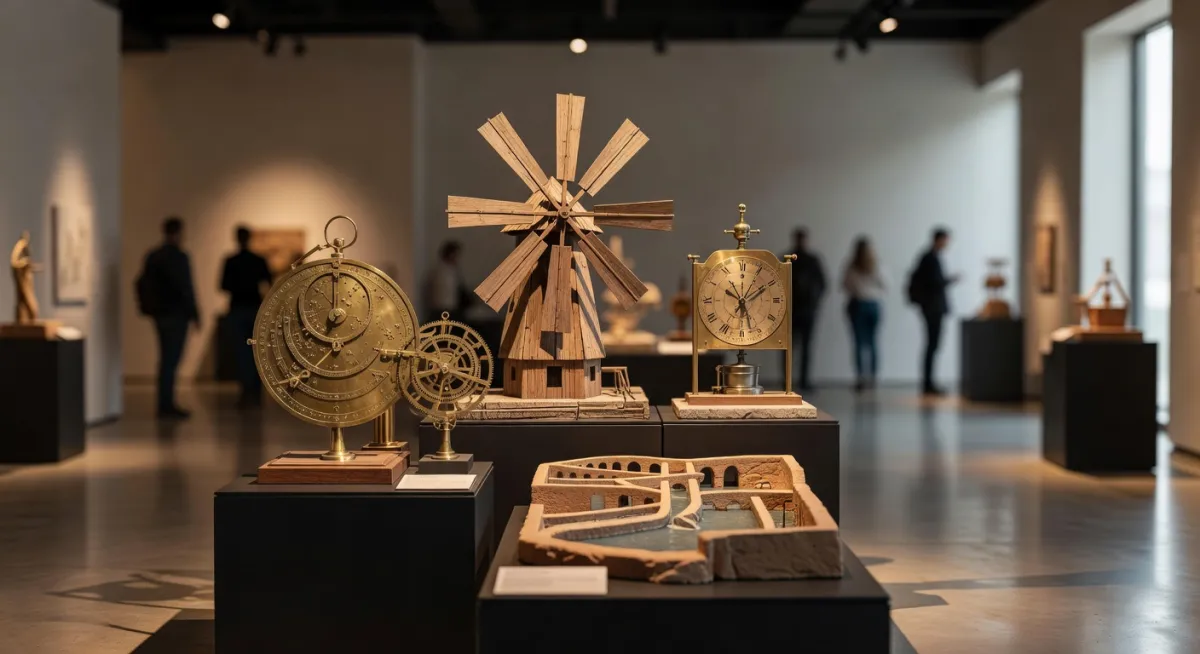
The cultural tapestry of Persia, known today as Iran, is woven with threads of profound intellectual achievements and groundbreaking innovations. For centuries, Persian scholars and thinkers have contributed immensely to the global repository of knowledge, laying foundational stones in fields such as mathematics, astronomy, and engineering. Their work, deeply rooted in a tradition of inquiry and observation, reflects a heritage that values the pursuit of wisdom and the betterment of society through scientific advancement. This exploration into Persian science and inventions offers a glimpse into a legacy that continues to influence modern disciplines.
The Persian civilization, with its strategic position at the crossroads of ancient trade routes, became a melting pot of ideas and cultures. This unique position fostered an environment where scholars could exchange knowledge with counterparts from distant lands, blending local insights with foreign discoveries. From intricate architectural designs to pioneering mathematical concepts, the contributions of Persian intellectuals have left an indelible mark on the world. Their inventions and scientific methodologies were often ahead of their time, showcasing a remarkable understanding of the natural world and its underlying principles.
Delving into this rich history, one uncovers a tradition of innovation that spans numerous domains. The following points highlight some key aspects of Persian scientific heritage:
- Astronomical Precision: Persian astronomers developed sophisticated tools and techniques to map the stars, creating detailed star catalogs and refining the understanding of celestial movements. Their observatories were centers of learning, attracting scholars from various regions.
- Mathematical Innovations: The introduction of algebraic concepts and the refinement of numerical systems by Persian mathematicians revolutionized problem-solving and computation, influencing global mathematical thought.
- Engineering Marvels: Ingenious water management systems, such as qanats, demonstrated advanced engineering skills, ensuring sustainable irrigation in arid landscapes and supporting agricultural growth.
- Chemical Knowledge: Persian scholars made significant strides in chemistry, experimenting with distillation and other processes that laid the groundwork for later scientific developments in alchemy and material science.
- Architectural Ingenuity: The use of complex geometric patterns and structural innovations in Persian architecture not only served aesthetic purposes but also reflected a deep understanding of physics and environmental adaptation.
- Philosophical Foundations: The integration of scientific inquiry with philosophical thought encouraged a holistic approach to knowledge, fostering debates and discussions that enriched Persian intellectual life.
The Roots of Persian Scientific Thought
Persian scientific traditions are deeply embedded in the cultural and intellectual ethos of ancient Persia. The region's scholars were often supported by ruling dynasties that valued knowledge as a cornerstone of progress. Libraries and centers of learning flourished, preserving ancient texts and fostering new research. This environment allowed for the synthesis of ideas from neighboring civilizations, including Greek, Indian, and Chinese influences, which were then refined and expanded upon by Persian thinkers. The emphasis on empirical observation and logical reasoning became a hallmark of their approach, evident in the meticulous records and treatises that have survived through history.
These intellectual pursuits were not merely academic exercises but were often applied to practical challenges. For instance, advancements in astronomy were crucial for navigation and agriculture, while innovations in engineering addressed the needs of growing urban centers. This practical application of science underscores the pragmatic nature of Persian scholarship, where theoretical knowledge was always linked to real-world benefits. To explore more about the historical contexts that shaped these developments, visit the Historical Eras section of the website.
Key Persian Inventions and Their Global Impact
Among the many contributions of Persian science, certain inventions stand out for their enduring influence on global progress. The development of the qanat system, an underground aqueduct technology, is a prime example of Persian ingenuity in water management. These systems allowed for the efficient transport of water over long distances in arid regions, supporting agriculture and settlement in otherwise inhospitable areas. The principles behind qanats have inspired modern irrigation techniques, demonstrating the timeless relevance of Persian engineering.
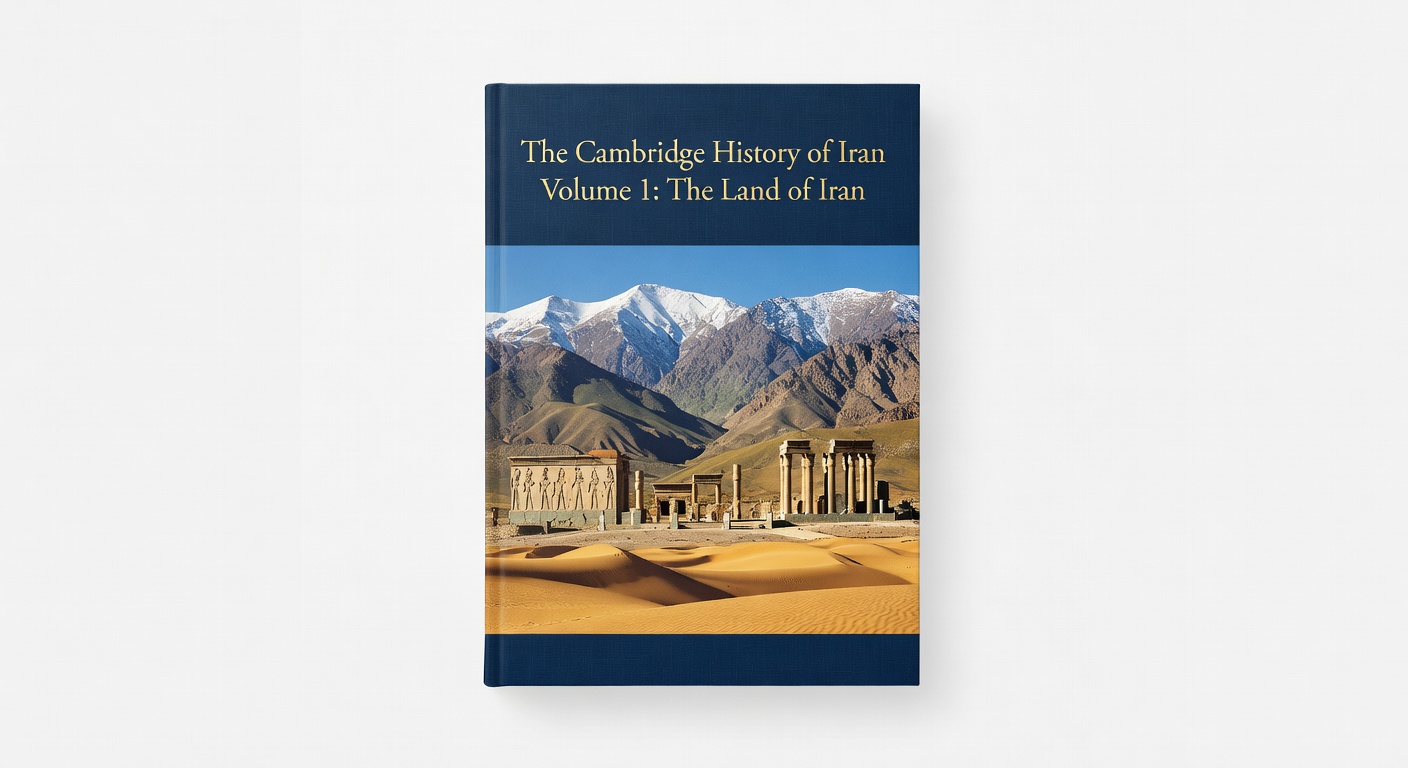
As an Amazon Associate, we earn from qualifying purchases.
Another significant contribution lies in the realm of mathematics, where Persian scholars formalized concepts that are fundamental to contemporary algebra. Their work on quadratic equations and geometric solutions provided tools that were later adopted and expanded by scholars across Europe and beyond. Additionally, their advancements in optics and the study of light refraction contributed to the evolution of scientific instruments, influencing fields as diverse as astronomy and art. For more on how these innovations intersect with Persian creativity, explore the Traditional Music and Arts category.
As an Amazon Associate, we earn from qualifying purchases.
Influential Persian Thinkers in Science
The legacy of Persian science is inseparable from the brilliant minds that drove its advancements. Scholars in this region were not only scientists but also philosophers, poets, and polymaths whose interdisciplinary approaches enriched their contributions. Their treatises often combined rigorous scientific analysis with profound philosophical insights, reflecting a worldview that sought to understand the universe in its entirety. Their influence extended beyond Persia, shaping intellectual currents in the Islamic world and eventually reaching Europe during periods of cultural exchange.
These thinkers often worked in collaborative environments, engaging with peers through debates and correspondence. Their dedication to preserving and expanding knowledge is evident in the vast libraries of manuscripts that document their discoveries. For a deeper dive into the philosophical underpinnings of their work, readers are encouraged to explore the Philosophy and Thinkers section. Additionally, external resources like Encyclopaedia Britannica provide comprehensive overviews of these influential figures.
Preservation of Persian Scientific Heritage
The preservation of Persian scientific heritage has been a collective endeavor, involving scholars, historians, and cultural institutions dedicated to safeguarding this invaluable legacy. Ancient manuscripts, often adorned with intricate calligraphy and illustrations, serve as primary sources for understanding the depth of Persian scientific thought. These texts, housed in museums and libraries worldwide, offer insights into the methodologies and discoveries of past scholars. Institutions like The Metropolitan Museum of Art showcase artifacts that highlight the intersection of science and art in Persian culture.
Beyond physical preservation, the transmission of Persian scientific knowledge through translations and adaptations has ensured its survival across generations. The cultural reverence for learning and innovation continues to inspire contemporary researchers and educators who draw upon these ancient traditions. For those interested in the literary expressions of this heritage, the Poetry and Literature category offers a complementary perspective, including works like The Poems of Rumi.
Frequently Asked Questions
What are some notable Persian inventions?
Notable Persian inventions include the qanat irrigation system, which revolutionized water management in arid regions, and early windmills, which harnessed natural energy for practical use. Their contributions to algebra and astronomy also stand as enduring innovations.
How did Persian science influence other cultures?
Persian science influenced other cultures through the translation of key texts into Arabic and later into Latin, spreading knowledge to the Islamic world and Europe. Their mathematical and astronomical discoveries became foundational for later scientific advancements.
Why was astronomy significant in Persian culture?
Astronomy held significant importance in Persian culture due to its applications in navigation, agriculture, and religious practices. Observatories were established as centers of learning, producing detailed star catalogs and refined calendars.
What role did Persian scholars play in mathematics?
Persian scholars played a pivotal role in mathematics by formalizing algebraic concepts and advancing numerical systems. Their work on equations and geometry provided essential tools for problem-solving across various fields.
How is Persian scientific heritage preserved today?
Persian scientific heritage is preserved through ancient manuscripts, cultural institutions, and digital archives. Museums and libraries worldwide house these treasures, while modern scholars continue to study and translate historical texts for broader access.
Final Thoughts
The exploration of Persian science and inventions reveals a heritage of unparalleled ingenuity and intellectual curiosity. This legacy, built on centuries of observation, experimentation, and philosophical inquiry, continues to resonate in modern scientific thought. From engineering marvels to mathematical breakthroughs, the contributions of Persian scholars have shaped the trajectory of human knowledge, offering lessons in innovation and perseverance. For those eager to learn more about the broader aspects of Persian culture, additional resources can be found in categories such as Science and Inventions and Cultural and Social Aspects. Dive deeper into this fascinating world and uncover the timeless wisdom of Persian traditions by exploring the website further.