Long before container ships and satellite navigation, merchants were crossing the Persian Gulf in stitched-plank boats loaded with copper, textiles, lapis lazuli, and spices. The sea lanes threading between the Iranian coastline, the Arabian Peninsula, and the Indian subcontinent formed one of the ancient world's most durable commercial systems — one that endured political upheavals, dynastic collapses, and shifting empires for roughly two thousand years. Understanding how that network actually functioned reveals something remarkable: the Persian Gulf was not a remote backwater but the beating heart of inter-civilizational exchange.
The Geography That Made It All Possible
The Persian Gulf is a shallow, semi-enclosed sea roughly 990 kilometres long and no wider than 340 kilometres at its broadest point. Those dimensions matter. Sailors could cross from the Iranian shore to the Arabian coast in a matter of days rather than weeks, and the predictable seasonal winds — part of the broader Indian Ocean monsoon system — gave mariners a reliable, almost clockwork schedule for outbound and return voyages. Summer winds pushed boats southward and eastward toward India; the winter reversal brought them home.
At the northern end, the Shatt al-Arab waterway funnelled goods from Mesopotamia's river systems into the Gulf. At the southern end, the Strait of Hormuz opened onto the Arabian Sea and, beyond it, the Indian Ocean. Any merchant who understood these winds and chokepoints held the keys to an enormously lucrative corridor.
As an Amazon Associate, I earn from qualifying purchases.
Origins: Trade Before Empires
Archaeological evidence pushes Gulf maritime trade back to at least the third millennium BCE. The civilization archaeologists call Dilmun — centred on what is now Bahrain — appears in Sumerian texts as a prosperous entrepôt. Cuneiform tablets from ancient Ur record imports of copper from a place called Magan (almost certainly the Oman coast) and cotton textiles and carnelian beads from Meluhha, widely identified with the Indus Valley civilization. This triangular exchange — Mesopotamia, the Gulf islands and Arabian coast, and South Asia — established a template that later empires would inherit and expand rather than invent from scratch.
The goods that moved in this early period were not luxuries alone. Copper was an industrial metal, essential for tools and weapons. Timber from the Indian coast supplied treeless Mesopotamia. Grain, dates, and salted fish moved in the other direction. The Gulf trade, even at its earliest, combined prestige goods with practical commodities — a combination that gave the network resilience.
The Persian Imperial Moment
The transformation of the Gulf from a regional exchange system into something truly intercontinental accelerated under the Achaemenid Empire and its conquests. When Cyrus the Great founded the Achaemenid dynasty in the sixth century BCE, Persian power eventually stretched from Egypt and Anatolia in the west to the borders of India in the east. That territorial span had direct commercial consequences: a single administrative system, a shared coinage standard in certain regions, and royal roads connecting inland centres to coastal outlets all reduced the friction of long-distance trade.
Darius I, who ruled from 522 to 486 BCE, took particular interest in maritime infrastructure. He completed a canal connecting the Nile to the Red Sea, and Persian administrators documented trade flows along both the Gulf and the Red Sea routes. The Persepolis Fortification Tablets — clay records found at the Achaemenid capital — list rations paid to workers and travelling officials from dozens of different regions, offering a snapshot of how goods and people moved across this vast empire. The Gulf ports on the Iranian coast, including areas near modern Bushehr and Bandar Abbas, served as collection and redistribution points for goods arriving from Arabia and India before they moved inland toward the imperial heartland.
As an Amazon Associate, we earn from qualifying purchases.
What Was Actually Traded?
The commodity list that moved through the Persian Gulf over the centuries is striking in its variety. From India came pepper, cinnamon, and other spices; cotton cloth of grades ranging from coarse sailcloth to fine muslin; teak and other hardwoods; ivory; and precious stones including diamonds and rubies. From Arabia came frankincense and myrrh — resins with enormous religious and medicinal value — as well as horses, which the dry Arabian breeds could command premium prices for in markets from Persia to India. From the Iranian plateau came metalwork, woollen textiles, saffron, and manufactured goods reflecting the high craft traditions of Persian cities. Mesopotamia exported grain, date products, and finished pottery.
Pearls deserve special mention. The shallow, warm waters of the Gulf produced some of the finest natural pearls in the ancient world, and pearl fishing was practised along both the Arabian and Iranian coasts for millennia. Persian Gulf pearls reached markets as far away as Rome and China. This single luxury product generated enough wealth to sustain entire coastal communities and fund the construction of port towns.
The Ships and the Sailors
The vessels that worked the Gulf were adapted to its specific conditions. Ancient Gulf boats were typically built using a technique of stitching planks together with rope made from coconut fibre — a construction method that produced hulls flexible enough to handle shallow, shifting sandbars without the rigidity that might cause a nailed wooden hull to crack. These stitched boats, ancestors of the later dhow tradition, could be repaired at sea using materials carried aboard, a critical advantage on long voyages without guaranteed dry-dock facilities.
Navigation depended on accumulated knowledge passed through communities of sailors rather than written charts, at least in the early centuries. Pilots knew the stars, the seasonal winds, the colour and smell of different water conditions, and the locations of freshwater sources along the coast. This knowledge was professionally valuable and carefully guarded. By the time Arab and Persian sailors were routinely making the run to India's Malabar Coast, they had developed a sophisticated oral and later written tradition of navigational instruction.
Key Port Cities and Their Roles
Hormuz and the Strait
The island and coastal city of Hormuz — which gave its name to the strait — became one of the Gulf's defining entrepôts. By the medieval period it was renowned across the Indian Ocean world as a place where merchants from dozens of nations mingled. The Moroccan traveller Ibn Battuta visited in the fourteenth century CE and described a city of extraordinary cosmopolitan character. But Hormuz's importance as a transit point was ancient, rooted in the geographic reality that everything passing between the Gulf and the Indian Ocean had to move through the waters it controlled.
Siraf on the Iranian Coast
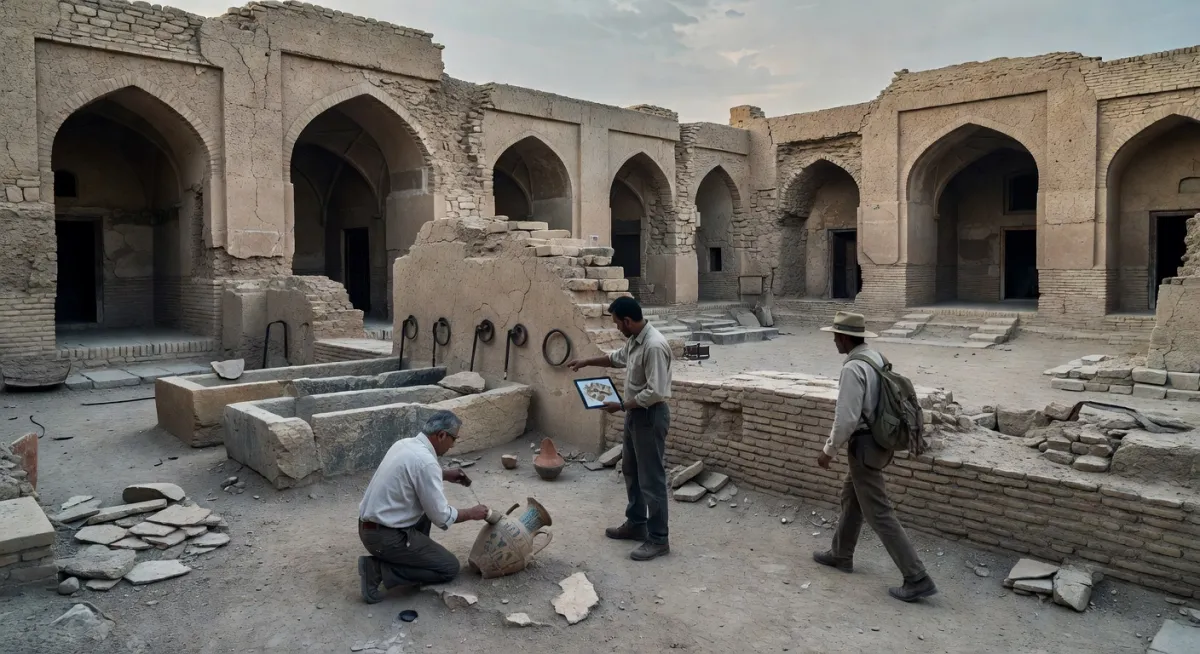
Siraf, located on the Iranian shore of the Gulf in what is now Fars Province, was during the early Islamic period one of the busiest ports in the world. Archaeological excavations have uncovered a city of substantial stone buildings, a large congregational mosque, and evidence of ceramic imports from China, demonstrating that Siraf was a node in an exchange network that reached the Far East. At its peak, perhaps in the ninth and tenth centuries CE, Siraf housed a wealthy merchant class whose prosperity was built entirely on maritime trade.
Apologos and the Mesopotamian Outlets
Near the head of the Gulf, where Mesopotamian river systems met the sea, ports served as the interface between the waterborne Gulf trade and the overland and river routes running deep into the Middle East. These outlets shifted over time as river courses changed and political centres moved, but the function remained constant: connecting the interior agricultural and craft economies of Iran and Mesopotamia to the maritime commercial world.
The Parthian and Sassanian Eras: Consolidating the Network
After Alexander the Great's conquests disrupted Achaemenid power, the Gulf trade network did not collapse — it adapted. The Parthian and Sassanian dynasties that followed maintained active interest in Gulf commerce, both because the customs revenues it generated were significant and because controlling the movement of Indian Ocean goods gave them leverage over rival powers, including Rome. The Sassanian Empire in particular developed a sophisticated administrative approach to maritime trade, establishing port regulations and taxing merchant shipping in ways that foreshadow later customs systems.
Sassanian merchants and sailors were active participants, not merely passive regulators. Persian commercial communities established themselves on the Arabian coast, in East Africa, and on the Indian subcontinent — particularly in the ports of Gujarat and the Malabar Coast. This diaspora of Iranian merchants carried not only goods but language, religion, and cultural practices with them. The presence of Zoroastrian merchant communities in Gujarat, known today as the Parsis, is a living legacy of this Sassanian-era commercial migration.
How Trade Shaped Cities and Cultures
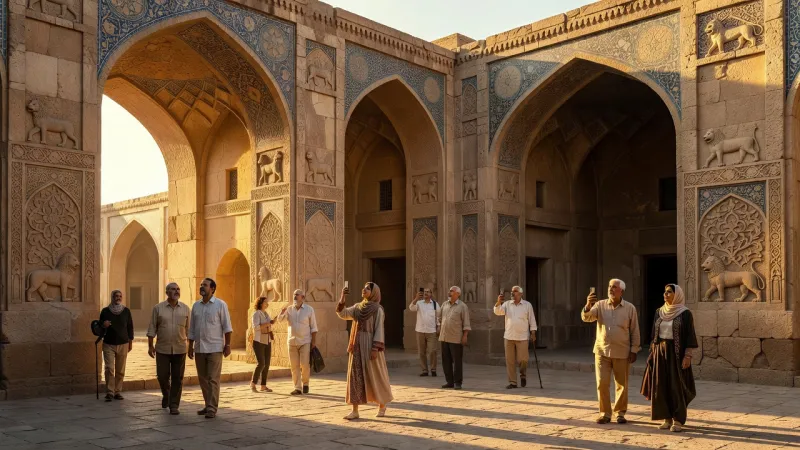
The wealth generated by Gulf trade did not simply accumulate in merchants' storerooms. It funded architecture, patronised artisans, and created the economic surplus that sustained urban life across the region. Cities on the Iranian coast that might otherwise have been modest fishing settlements became substantial urban centres with markets, caravanserais, mosques, temples, and the full infrastructure of civilised commercial life.
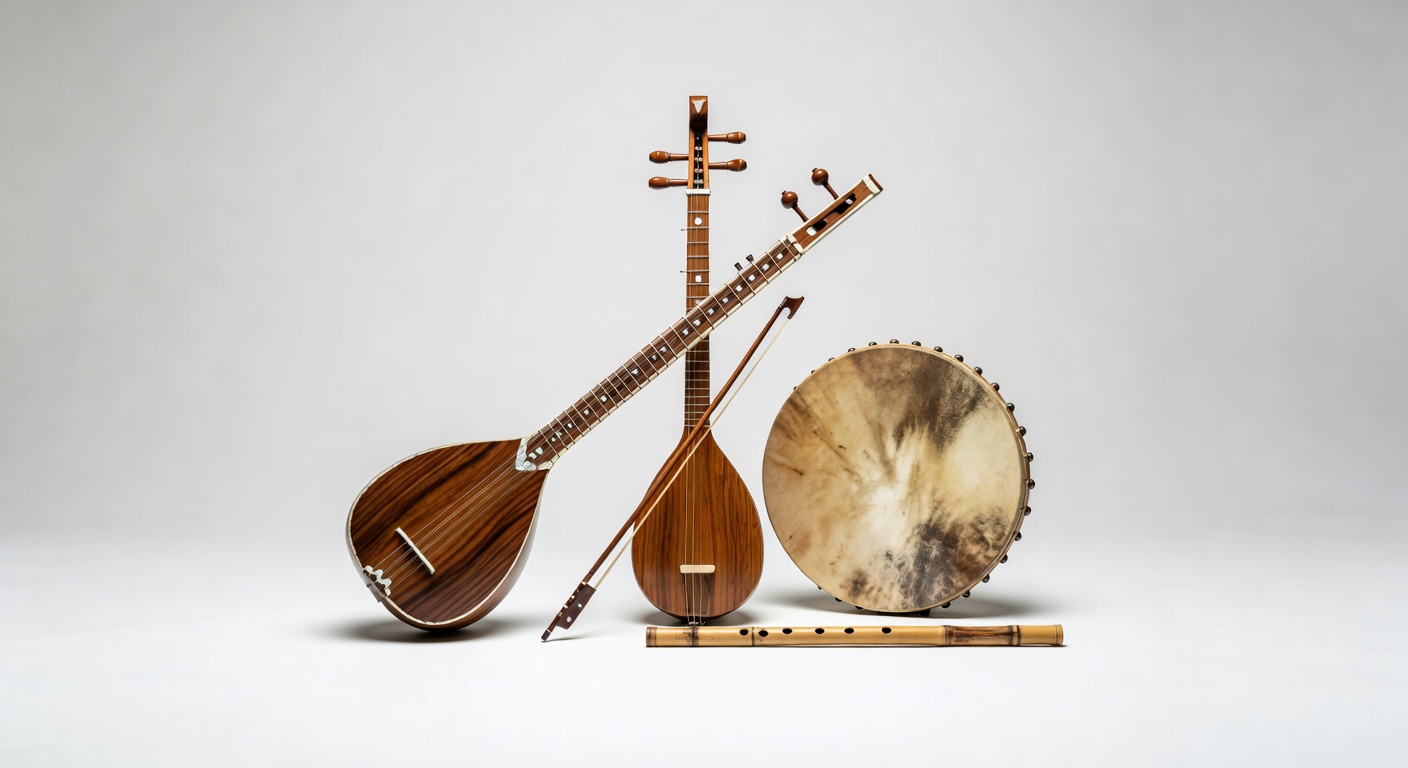
Cultural exchange was inseparable from commercial exchange. Indian mathematical concepts — including numerical systems that would eventually transform global calculation — moved westward through merchant networks that passed through the Gulf region. Culinary ingredients, textile techniques, musical instruments, and religious ideas all followed the same channels as pepper and pearls. The trade and economic systems of the Gulf were simultaneously cultural transmission systems.
Arabic loanwords in Persian commercial vocabulary, Persian loanwords in the trade languages of coastal India, and the shared architectural grammar of port-city caravanserais from Hormuz to Calicut all testify to centuries of contact conducted through commerce. The Gulf was, in this sense, not just a body of water but a medium through which civilisations communicated.
The Islamic Golden Age and the Peak of Gulf Commerce
The rise of Islam in the seventh century CE did not interrupt Gulf trade — it dramatically amplified it. The unification of Arabia, Persia, and eventually much of the Indian Ocean littoral under a common religious and legal framework created new conditions for long-distance commerce. Islamic contract law provided reliable frameworks for partnerships between merchants who might never meet face to face. The institution of the commenda — a partnership where one party provided capital and another provided labour and expertise — allowed risk to be shared across long voyages in ways that encouraged investment.
Baghdad, founded in 762 CE as the Abbasid caliphate's capital, sat at the confluence of the Gulf trade routes and the overland Silk Road network. Goods from China, India, East Africa, and the Mediterranean all converged there. The result was an urban economy of extraordinary complexity and a court culture that demanded the finest products the connected world could supply. The demand from Baghdad and other great Islamic cities drove Gulf trade to new levels of intensity and organisation during the eighth through eleventh centuries.
Lasting Legacies
The ancient maritime network of the Persian Gulf left legacies that persist in recognisable forms today. The dhow-building traditions of the Gulf coast, though now largely replaced by modern vessels, survived into the twentieth century using techniques directly descended from ancient practice. The commercial city-states of the Arabian coast — their economies built on entrepôt trade, pearling, and maritime service — represent an urban model shaped by millennia of Gulf commercial culture. The Persian diaspora communities in India trace their origins to trade-era migration. Even the geopolitical significance attached to the Strait of Hormuz in contemporary international relations reflects an ancient geographic reality: whoever controls that passage influences the flow of vital commodities between East and West.
What the history of Persian Gulf trade ultimately demonstrates is that globalisation — understood as the structured, sustained exchange of goods, people, and ideas across vast distances — is not a modern invention. The merchants who loaded boats on the Iranian shore two thousand years ago were participating in a system as sophisticated, as consequential, and as genuinely international as anything that followed them.