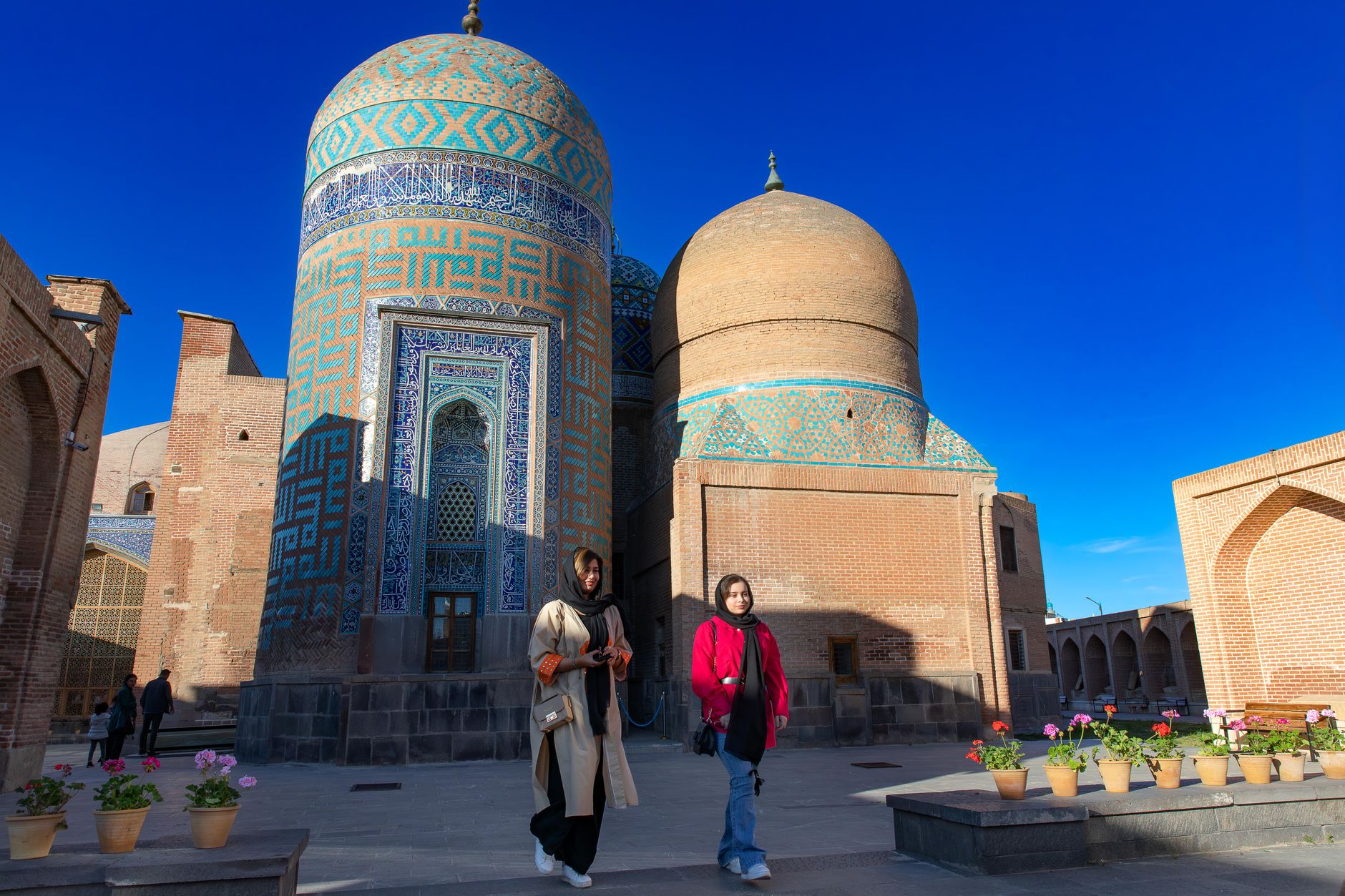
Few transformations in Islamic history are as dramatic as the rise of the Safavid Empire. In little more than a century, a modest Sufi religious order based in the northwestern Iranian town of Ardabil evolved into one of the most powerful dynasties the Middle East had ever seen — one that unified a fragmented Iran, declared Twelver Shia Islam its official faith, and set the cultural and religious contours of the country that exist to this day. Understanding how the Safavid empire rose to power means following a story that weaves together mystical religion, military ambition, tribal politics, and a remarkably shrewd use of ideology.
Roots in a Sufi Brotherhood
The story begins not with swords and armies but with prayer and spiritual guidance. The Safavids originated as the leaders of the Safaviyya, a Sufi religious order founded in Ardabil by Sheikh Safi al-Din Ishaq Ardabili in the early 14th century. Sheikh Safi al-Din — from whom the dynasty takes its name — built a reputation as a holy man of exceptional piety, drawing disciples from across the region to his lodge, or khanqah, in Ardabil.
The Safaviyya order belonged to the rich tradition of Sufi mysticism in Persian thought, emphasizing personal devotion, the veneration of saintly figures, and a direct spiritual relationship with the divine. In its earliest decades, the order had no obvious political ambitions. Its power was devotional — the sheikhs accumulated followers, prestige, and the loyalty of communities who believed in their spiritual authority.
As an Amazon Associate, I earn from qualifying purchases.
Over the following generations, however, something significant shifted. The Safaviyya leadership gradually moved away from its more ecumenical Sunni Sufi origins and drew closer to Shia sympathies, particularly the veneration of Ali and the twelve imams central to Twelver Shia Islam. Exactly when and why this theological drift occurred is debated by historians, but the practical effect was profound: it gave the order a sharper ideological edge and connected it to communities with deep grievances under Sunni ruling powers.
The Qizilbash: Warriors of the Red Head
No account of the Safavid rise is complete without understanding the Qizilbash — literally "red heads," named for the distinctive crimson headgear they wore. These were Turkic tribal warriors, drawn from several different Anatolian and Azerbaijani tribal confederations, who became the military backbone of the Safavid movement.
The Qizilbash were not merely soldiers for hire. They were true believers, devoted to the Safavid sheikhs with an almost messianic fervor. They viewed the Safavid leader as a divine or semi-divine figure — a representative of the hidden imam, even a manifestation of God on earth in some of their more extreme expressions of devotion. This religious intensity made them extraordinarily motivated fighters, willing to charge into battle against numerically superior enemies.
It was this combination — a charismatic, spiritually charged leadership and a fanatically loyal tribal army — that gave the Safavids the engine they needed for conquest. Other regional powers had armies; the Safavids had a movement.
As an Amazon Associate, we earn from qualifying purchases.
Shah Ismail I and the Conquest of Tabriz
The decisive moment came with Ismail, the young heir to the Safavid order who would become its first shah. He began his military campaigns while still a teenager, gathering Qizilbash support and defeating rival powers across the region with startling speed. The Safavid dynasty was founded by Shah Ismail I, who declared himself ruler of Iran in 1501 after capturing Tabriz, the Aq Qoyunlu capital.
The Aq Qoyunlu — the "White Sheep" Turkmen confederation — had been the dominant power in northwestern Iran and Anatolia, but they had recently been weakened by internal succession disputes. Ismail exploited this fragility brilliantly. His victory at Tabriz was not just a military triumph; it was a political and religious declaration. He was not presenting himself merely as another tribal warlord seizing territory. He was announcing the birth of a new kind of state.
Within that same year of taking Tabriz, Ismail made a move that would echo through centuries: he declared Twelver Shia Islam the official religion of his realm. This was not a quiet administrative decision. In a region where the vast majority of Muslims were Sunni, it was a radical and deliberately provocative act. Ismail reportedly had the Friday prayers read in the Shia manner and instructed preachers to publicly curse figures revered by Sunnis — acts calculated to draw a sharp line between his state and the surrounding Sunni powers, particularly the Ottoman Empire to the west and the Uzbeks to the northeast.
Why Shia Islam? The Logic Behind the Declaration
Declaring Shia Islam the state religion was as much a political masterstroke as a religious conviction. Iran at the time was a patchwork of competing powers with no strong unifying identity. By imposing a distinct religious identity, Ismail gave his new state something to cohere around — a sense of sacred community that transcended tribal and regional loyalties.
It also served as a permanent marker of difference from the Ottoman Sultans, who positioned themselves as the defenders of Sunni Islam. The two empires would fight repeatedly throughout the 16th century, and the Shia-Sunni divide became inseparable from their geopolitical rivalry. For Ismail, this distinction made his realm not just a different political entity but an opposing sacred one.
There was a deeper cultural resonance too. Iran had always possessed a distinct civilizational identity — one stretching back through the Parthian and Sassanian dynasties and the ancient Persian world. Shia Islam, with its emphasis on the righteousness of the oppressed, its veneration of martyrs, and its rejection of illegitimate authority, found fertile ground in communities that already felt a strong sense of Iranian particularity. Ismail was fusing religious fervor with emerging national feeling.
Consolidating Power: From Conquest to Empire
After Tabriz, Ismail moved rapidly. Within a decade, he had brought most of the Iranian plateau under Safavid control — defeating the remaining Aq Qoyunlu forces, subjugating Khorasan in the east, and pushing into Iraq, capturing the holy Shia cities of Najaf and Karbala. By around 1510, he controlled a realm that roughly corresponded to the territory of modern Iran, making him one of the most successful conquerors of his era.
But consolidation required more than military victory. Ismail had to build a functioning state from disparate territories. He retained Persian administrative traditions and relied heavily on Persian-speaking bureaucrats and officials to run the day-to-day business of government. This created a characteristic Safavid duality: a Turkic military aristocracy (the Qizilbash) sitting alongside a Persian administrative class. Managing the tension between these two groups would occupy Safavid rulers for generations.
The imposition of Shia Islam also required active construction, not just declaration. Much of Iran's population was Sunni, and conversion — sometimes voluntary, sometimes coerced — was a long process. Ismail and his successors imported Shia scholars, many from the Arab Shia communities of what is now Lebanon and Bahrain, to fill the religious roles that Persian Sunni clerics would not play. Over generations, Iran was genuinely transformed into the predominantly Shia country it remains today.
The Battle of Chaldiran and Its Consequences
The limits of Safavid power became apparent in 1514 at the Battle of Chaldiran, where the Ottoman Sultan Selim I inflicted a crushing defeat on Ismail. The Ottomans held a decisive advantage: they had embraced gunpowder weapons — artillery and muskets — while the Qizilbash, proud of their cavalry tradition, had not. The Qizilbash fighters who charged Ottoman cannons with swords and religious fervor were brave but outmatched.
Chaldiran was a watershed. It halted Safavid expansion westward and briefly cost Ismail Tabriz itself, though he recovered it. More significantly, it broke Ismail's aura of invincibility. The Qizilbash, who had believed their leader divinely protected, were shaken. Ismail himself reportedly withdrew from active public life for a period, reportedly drinking heavily, his confidence clearly damaged.
But the dynasty survived. The loss forced the Safavids to modernize militarily over the following decades, and by the reign of Shah Abbas I in the late 16th and early 17th centuries, the empire would reach its cultural and political peak — with a reformed army, a magnificent new capital at Isfahan, and an administration no longer entirely dependent on Qizilbash power.
A Legacy That Outlasted the Dynasty
The Safavid Empire eventually fell in 1722 when Afghan invaders sacked Isfahan, but the transformation it engineered proved permanent. Iran had been remade as a Shia state, and that identity had embedded itself deeply enough to survive the dynasty's collapse, the subsequent chaos, and the arrival of modern nationalism. When the Islamic Republic of Iran was established in 1979, it drew on Shia clerical authority as the foundation of its political legitimacy — a direct, if evolved, inheritance of the framework Shah Ismail inaugurated in 1501.
The Safavids also left behind a cultural flowering that shaped Persian art, architecture, literature, and philosophy in lasting ways. The great mosques and gardens of Isfahan, the refinement of Persian miniature painting, the patronage of poets and scholars — all flourished under Safavid rule.
Understanding how the Safavid empire rose to power is ultimately understanding how religion, politics, and identity become fused in ways that outlast any individual ruler or dynasty. What began as a Sufi brotherhood in Ardabil became the template for a nation.
Sources
Every factual claim in this article was independently verified against the following sources:
- Aq Qoyunlu — en.wikipedia.org
- Safavid Iran — en.wikipedia.org
