There is something instinctively persuasive about a message carved into a mountain. Paper burns, monuments crumble, empires collapse — but a cliff face endures. The rulers of ancient Persia understood this perfectly. For well over a millennium, from the Achaemenid kings of the sixth century BCE through the Sasanian shahs of the seventh century CE, Persian monarchs commissioned enormous images and inscriptions cut directly into living rock. These were not decorative flourishes. They were carefully designed instruments of political authority — visual arguments, etched in stone, that a king's power was as permanent and immovable as the earth itself.
What Is a Rock Relief?
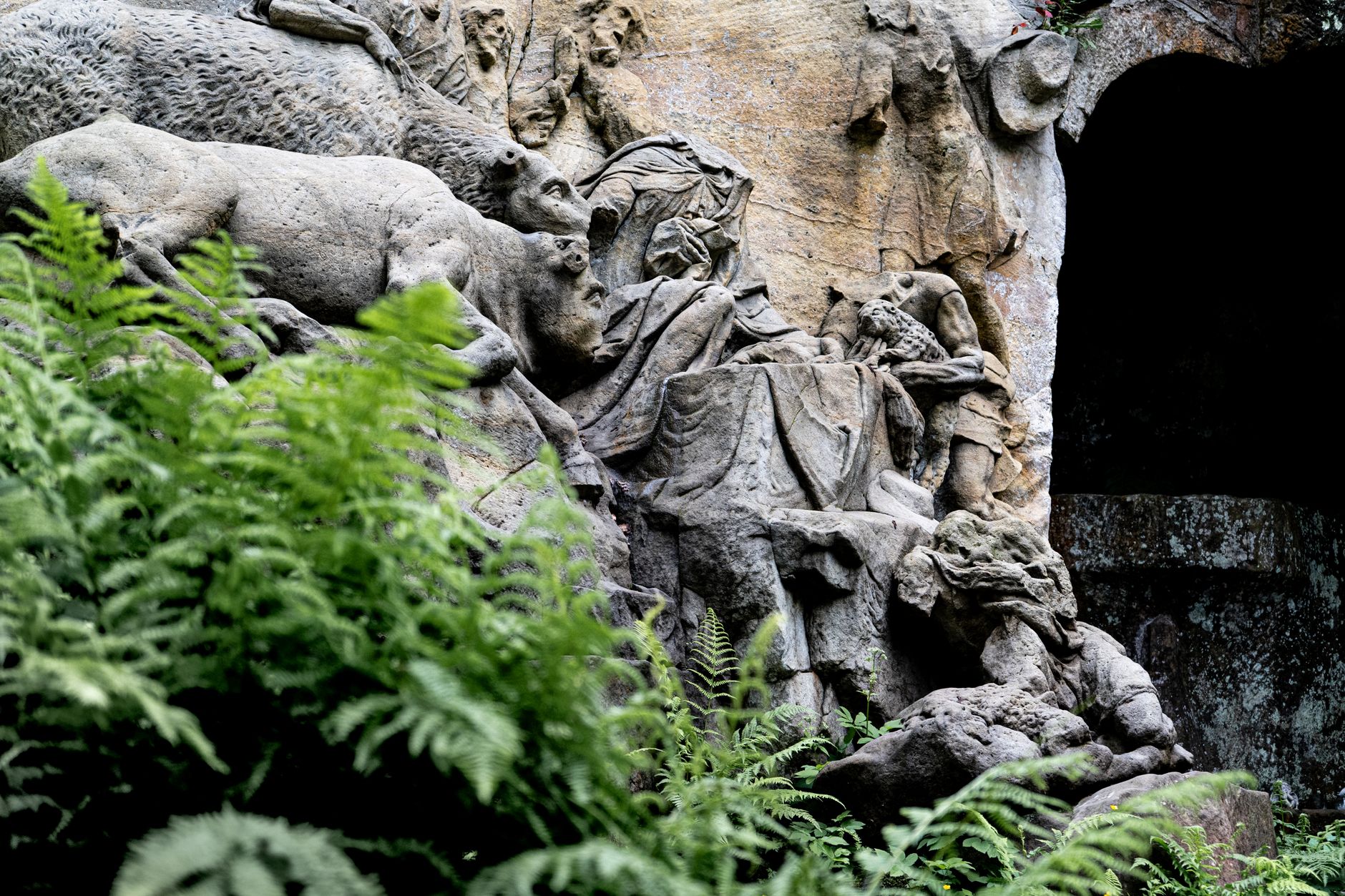
A rock relief is exactly what the name suggests: a sculptural image carved in relief — meaning the figures project outward from the surface — directly into the face of a natural cliff or boulder. Unlike freestanding statues that can be toppled or temple carvings that can be demolished with the building, rock reliefs are inseparable from the mountain itself. To destroy them, you would have to destroy the landscape.
Persian artisans were extraordinarily skilled at this. Working with metal chisels on limestone and sandstone cliffs, they produced images of remarkable size and sophistication: triumphant kings receiving submission, gods descending from winged symbols, battles frozen mid-charge, priests performing sacred rites. Some of these carvings stretch across hundreds of square meters of cliff face. The scale was deliberate — these were images meant to be seen from a distance, to dominate a valley or a road, to announce power before any traveler even arrived.
As an Amazon Associate, I earn from qualifying purchases.
The Achaemenid Foundation: Making Victory Permanent
The Achaemenid Empire and its conquests produced some of the earliest and most politically sophisticated rock reliefs in the ancient world. The dynasty that gave us Cyrus the Great and Darius I ruled an empire stretching from Egypt to the borders of India, and they needed tools of legitimacy that could function across vast cultural distances. A carved cliff could speak to an illiterate shepherd and a literate court official alike.
The most important Achaemenid site is Naqsh-e Rostam, a cliff face near Persepolis in modern Fars province. Here, four Achaemenid kings — Darius I, Xerxes I, Artaxerxes I, and Darius II — had their tombs cut directly into the rock, each fronted by a carved facade showing the king standing on a throne supported by representations of the empire's subject peoples. The message is precise: the king stands above everyone, upheld by the world he rules, and he does so even in death. The tomb itself becomes part of the image. The king is not merely buried — he is displayed, permanently, in a posture of authority.
Behistun: The Most Ambitious Stone Manifesto in History
No single rock relief better illustrates the political genius of this medium than the Behistun inscription. Carved into a cliff face in western Iran by order of Darius I around 522–486 BCE, it is written in three cuneiform scripts — Old Persian, Elamite, and Babylonian — and depicts Darius trampling a rebel while other captives are shown bound before him. The carving sits roughly 100 meters above the ground on a sheer cliff alongside a major ancient road connecting Mesopotamia to the Iranian plateau — a road traveled by merchants, soldiers, and messengers from across the known world.
The choice of location was not accidental. Every significant traveler on that route would look up and see Darius victorious, his enemies literally underfoot, the gods blessing him from above. The trilingual text ensured that literate readers from every corner of the empire — Persian, Elamite-speaking, or Babylonian — could read the same account of how Darius suppressed rebellions and assumed rightful kingship. The relief and inscription together formed a complete propaganda package: visual impact for the masses, textual detail for the educated, and geological permanence for everyone.
As an Amazon Associate, we earn from qualifying purchases.
The site's importance did not end in antiquity. The Behistun inscription was instrumental in deciphering cuneiform script in the 19th century, much as the Rosetta Stone unlocked Egyptian hieroglyphics, with Henry Rawlinson making key transcriptions in the 1840s. Rawlinson literally dangled from ropes against the cliff face to copy the texts — a fitting image of modern scholarship grappling with ancient power.
The Religious Dimension: When the Mountain Becomes Sacred
Persian rock reliefs were never purely political. They were always simultaneously religious, and the two functions were inseparable by design. In Achaemenid iconography, the winged figure of Ahura Mazda — the supreme deity of Zoroastrian tradition — appears above or beside the king in almost every major relief. The king does not merely claim earthly authority; he claims divine sanction. He acts on behalf of the cosmic order, and the rock relief makes this relationship literally visible and permanent.
This theological argument had practical implications. A ruler who positions himself as the earthly agent of divine will is not just claiming political power — he is claiming that opposition to him constitutes opposition to the cosmic order itself. Carved into a mountain, witnessed by the gods of the landscape, this claim becomes something approaching sacred fact. The permanence of stone reinforces the permanence of the divine mandate.
The Sasanian Reinvention: Rock Relief as Royal Theater
When the Parthian and Sassanian dynasties succeeded the Achaemenids — after Alexander's conquest and the Hellenistic interlude — the tradition of rock-cut imagery continued and evolved dramatically. The Sasanian kings, who ruled from roughly 224 to 651 CE, were prolific producers of rock reliefs and used them with even greater theatrical sophistication than their predecessors.
Sasanian reliefs are concentrated in Fars province, the heartland of Persian identity, and they depict a recurring set of themes: royal investiture (the king receiving a ring of sovereignty from the god Ahura Mazda or from Mithra), triumph over foreign enemies, and royal hunts that symbolize the king's mastery over chaos. The site of Naqsh-e Rajab and Naqsh-e Rostam together form a kind of open-air royal gallery, where Sasanian kings added their own carvings alongside and below those of the Achaemenids — deliberately connecting themselves to that older, legitimizing tradition.
Shapur I and the Triumph Over Rome
Perhaps the most striking Sasanian relief shows Shapur I celebrating his victory over the Roman Emperor Valerian in 260 CE — an event remarkable in its own right, as Valerian was the first Roman emperor captured alive in battle. At Naqsh-e Rostam and at Bishapur, Shapur had this triumph carved into the same cliff that bore the tombs of Achaemenid kings. Valerian is shown kneeling or held by Shapur's wrist, a Roman emperor reduced to a trophy in stone. The humiliation is permanent, witnessed by ancestors and gods alike. No written account of Roman defeat could carry the same weight as a cliff face that could not be argued with, corrected, or burned.
Location as Argument: Why These Sites Were Chosen
The placement of rock reliefs was never random. Sites were chosen for maximum visibility, for their proximity to important roads or water sources, and often for pre-existing sacred associations. Cliffs and mountains held spiritual significance in Iranian religious traditions long before organized Zoroastrianism — they were places where the human world met something larger. By carving royal images into these sites, kings were not just appropriating beautiful scenery; they were inserting themselves into a landscape already understood as sacred.
This is a crucial point for understanding why rock reliefs worked as political technology. The medium itself carried meaning. A king who carved himself into a mountain was saying: I am part of this land. I am as natural as the rock itself. My power did not arrive from outside and can not be removed from outside. It is here, in the earth, where it has always been and always will be.
Technique and the Human Cost of Eternity
The practical work of creating these monuments was formidable. Teams of skilled artisans — stonecutters, sculptors, and likely designers working from preliminary drawings — had to work on scaffolding suspended against cliff faces, sometimes at considerable heights. The carving at Behistun, positioned so high above the valley floor that it was largely illegible to anyone standing below, required extraordinary effort for an image that most viewers could barely read. This was not inefficiency; it was a statement. The carving was made for the gods and for eternity, not merely for contemporary human eyes.
Artists worked within established conventions — poses, proportions, and symbolic objects that communicated rank and narrative — but also adapted these conventions as political needs changed. Sasanian reliefs, for example, show more dynamic action and more attention to the specific identities of defeated enemies than the more formal Achaemenid style. The technology of legitimacy evolved with each dynasty's particular needs.
Why Stone? The Psychology of Permanence
It is worth pausing to ask why stone mattered so much when other media were available. Persian kings also used inscribed clay tablets, painted walls, woven tapestries, and struck coins to project their image. But none of these carried the same psychological weight as rock.
Stone resists time in a way that nothing made by human hands can easily match. When a king carves himself into a cliff, he is borrowing the cliff's permanence. He is making a claim that his authority belongs to the category of things that do not change — rivers, mountains, the movement of stars. This is an argument that operates below the level of conscious reasoning. You do not think your way to accepting it; you feel it, standing in a valley with the carving above you, older than your grandparents' grandparents, still there.
This is why the tradition persisted across such different dynasties and political contexts. The Achaemenids were Zoroastrian Iranians; the Sasanians were revivalist Iranians reacting against centuries of Hellenistic and Parthian rule. Their specific political claims and religious emphases differed substantially. But both recognized that the mountain could do something that no portable object could: it could make power feel geological.
Legacy: Reading the Cliffs Today
The rock reliefs of Persia survive in remarkable condition, many of them still clearly legible after two and a half millennia. They constitute one of the richest archives of ancient political thought available anywhere in the world — not as written arguments, but as visual ones, embedded in the physical landscape of Iran.
For the modern visitor, standing below Naqsh-e Rostam or looking up at Behistun, the original effect still works to some degree. There is something undeniably compelling about imagery at that scale, in that medium, in that setting. The kings who commissioned these works understood something fundamental about how humans experience power: not just through what they are told, but through what they see and feel and cannot easily ignore. They made their arguments in the one material that time has the least power to erase, and those arguments are still standing.
Sources
Every factual claim in this article was independently verified against the following sources:
- Behistun inscription — en.wikipedia.org