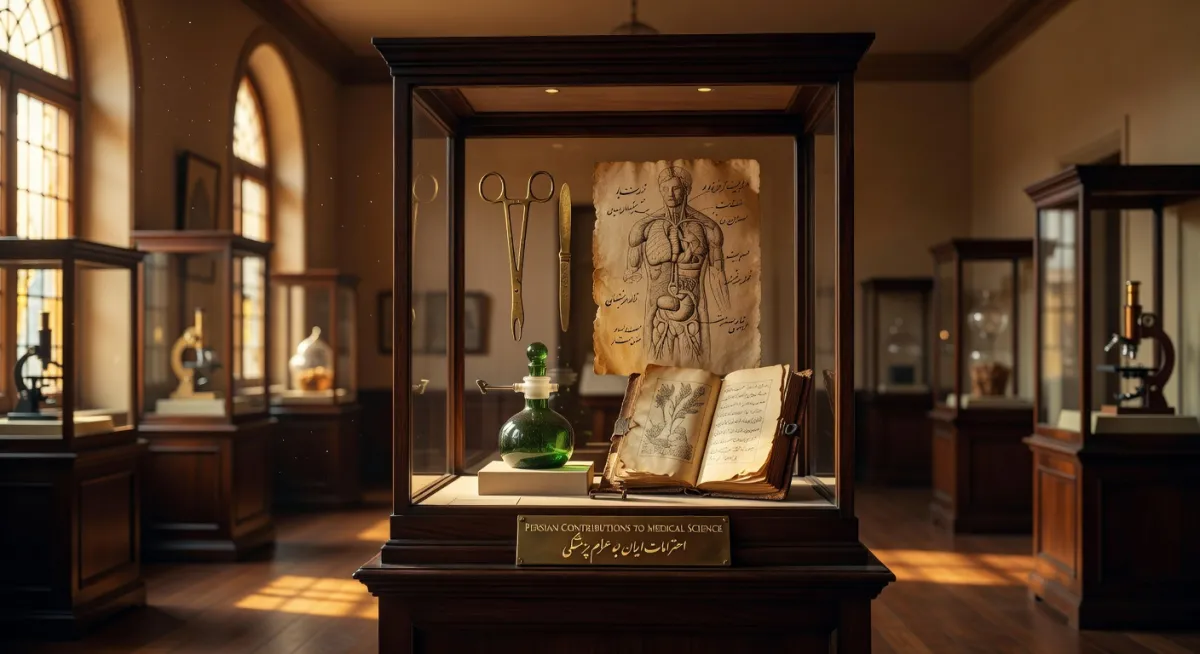
For Persian culture enthusiasts, history buffs, and music lovers, the legacy of Persian history extends far beyond art and melodies. It includes remarkable advancements in science and medicine, notably the contributions of Rhazes and Avicenna to healthcare. These two luminaries from the Islamic Golden Age revolutionized medical practices with their innovative approaches. Their work not only shaped Persian heritage but also influenced global healthcare systems, offering insights that resonate with those passionate about the depth of Persian contributions to human knowledge.
- Discover how Rhazes pioneered clinical observation in medical diagnosis.
- Learn about Avicenna's comprehensive medical encyclopedia, a cornerstone of medieval medicine.
- Understand the ethical standards Rhazes set for physicians, relevant even today.
- Explore how Avicenna's theories on psychology influenced holistic care.
- Appreciate the role of Persian scholarship in shaping global healthcare practices.
- Connect their medical advancements to broader Persian cultural achievements.
- Reflect on how these contributions enrich the study of Persian history.
The Legacy of Rhazes in Medical Innovation
Rhazes, known as Muhammad ibn Zakariyya al-Razi, emerged as a towering figure in Persian history. Born in Rayy, near modern-day Tehran, he became a polymath with expertise in medicine and alchemy. His contributions to healthcare included groundbreaking work in clinical observation. This method laid the foundation for evidence-based medical practice.
One of Rhazes' notable achievements was distinguishing smallpox from measles. He documented symptoms with precision, a first in medical history. His detailed records helped future physicians identify and treat these diseases. This meticulous approach reflects the Persian dedication to knowledge and precision.
Rhazes also wrote extensively on medical ethics. He urged doctors to prioritize patient care over personal gain. His texts emphasized compassion, a value deeply rooted in Persian culture. For history buffs, this ethical stance mirrors the moral teachings found in Persian literature.
Additionally, Rhazes contributed to pharmacology by compiling lists of remedies and compounds. His work in hospitals, including one he directed in Baghdad, showcased practical applications. Persian culture enthusiasts can see how his innovations align with the heritage of learning. His influence remains a point of pride in Persian medical history.
Avicenna's Monumental Impact on Medicine
Avicenna, or Ibn Sina, stands as another giant in the contributions of Rhazes and Avicenna to healthcare. Hailing from near Bukhara, his intellect spanned medicine, philosophy, and astronomy. His magnum opus, 'The Canon of Medicine,' became a medical bible for centuries. It systematized medical knowledge with unparalleled depth.
As an Amazon Associate, we earn from qualifying purchases.
This comprehensive text covered anatomy, pathology, and pharmacology. Avicenna introduced concepts like contagious diseases and quarantine. His insights on infection control were revolutionary for the era. They highlight the forward-thinking nature of Persian scholarship.
As an Amazon Associate, we earn from qualifying purchases.
Avicenna also explored the mind-body connection, a precursor to modern psychology. He linked emotional health to physical well-being, advocating holistic care. For music lovers, this resonates with the therapeutic role of Persian music in healing. His ideas reflect the cultural emphasis on harmony and balance.
History buffs will appreciate how Avicenna's work influenced European medicine during the Renaissance. His texts were translated and studied widely, bridging cultures. Persian culture enthusiasts can take pride in this global impact. Avicenna's contributions remain a testament to Persian intellectual heritage.
Ethical Foundations in Healthcare by Rhazes
Rhazes' contributions to healthcare extended beyond diagnostics to ethical principles. He believed physicians must serve with integrity and humility. His writings warned against exploiting patients for profit. This ethical framework is a gem in Persian history.
He also advocated for continuous learning among doctors. Rhazes insisted on updating knowledge through observation and study. This principle mirrors the Persian cultural value of wisdom-seeking. It's a lesson history buffs can admire in ancient practices.
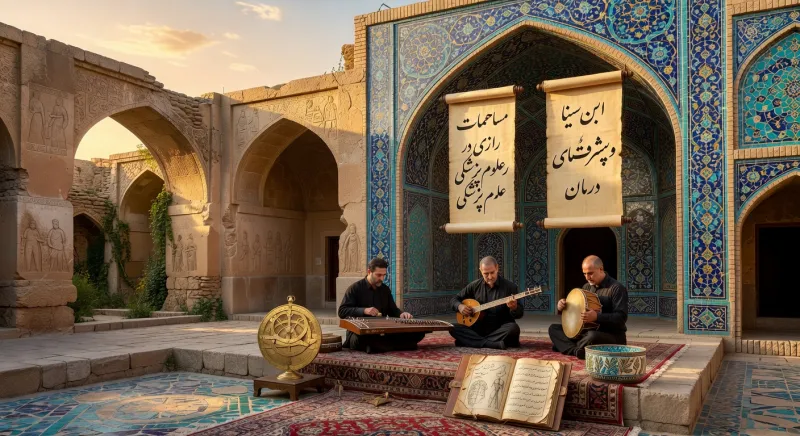
For Persian culture enthusiasts, Rhazes' ethics connect to broader societal values. His emphasis on compassion parallels themes in Persian poetry and art. The moral undertones in his medical teachings reflect a deep cultural heritage. They show how healthcare was intertwined with ethics in Persia.
Music lovers might find parallels in the harmony of Persian melodies. Just as music seeks balance, Rhazes sought fairness in medicine. His ethical contributions enrich the understanding of Persian history. They offer a lens into the moral compass of the era.
Avicenna's Holistic Approach to Healing
Avicenna's contributions to healthcare included a holistic view of human health. He recognized the interplay of physical and mental states. His theories on stress and emotions were ahead of their time. They underscore the depth of Persian medical thought.
He proposed that mental distress could manifest as physical illness. This insight influenced treatments that considered lifestyle and environment. For history buffs, this approach echoes the Persian focus on balance. It's a concept rooted in cultural philosophies.
Music lovers can relate Avicenna's ideas to the healing power of Persian tunes. Traditional melodies often soothe the mind, much like his prescribed therapies. Persian culture enthusiasts will see this as a blend of science and art. Avicenna's holistic methods highlight cultural interconnectedness.
His work in 'The Canon of Medicine' provided practical guidelines for physicians. It included dietary advice and preventive care. This comprehensive care model remains relevant today. It reflects the enduring wisdom of Persian heritage in healthcare.
Global Influence of Persian Medical Pioneers
The contributions of Rhazes and Avicenna to healthcare transcended Persian borders. Their texts were translated into Latin, shaping medieval European medicine. Universities across Europe taught Avicenna's 'Canon' for centuries. This global reach is a source of pride for Persian history buffs.
Rhazes' clinical methods influenced diagnostic practices worldwide. His emphasis on observation became a universal standard. For Persian culture enthusiasts, this showcases the far-reaching impact of their heritage. It connects to the broader narrative of Persian influence.
Music lovers might draw parallels with the universal appeal of Persian arts. Just as music transcends borders, so did these medical advancements. The spread of their knowledge mirrors the diffusion of Persian melodies. It's a testament to cultural richness and innovation.
Explore more about such impactful legacies in Persian Science and Inventions. For deeper insights into cultural exchanges, visit Cultural and Social Aspects. These resources offer history buffs a broader view. They also connect to authoritative sources like Encyclopaedia Britannica and The Metropolitan Museum of Art for further reading.
Connecting Medical Advances to Persian Culture
The contributions of Rhazes and Avicenna to healthcare are deeply tied to Persian cultural values. Their pursuit of knowledge reflects the Persian reverence for learning. This intellectual tradition is evident in poetry, music, and science. It's a unifying thread for enthusiasts of Persian heritage.
History buffs will note how their medical texts parallel epic works like the Shahnameh. Both preserve knowledge and cultural identity with meticulous detail. The dedication to documentation mirrors a broader Persian commitment. It's a legacy of preserving wisdom for future generations.
For music lovers, the harmony in Persian compositions echoes medical balance. Rhazes and Avicenna sought equilibrium in health, much like musicians in melody. This connection enriches the appreciation of Persian arts. It shows how science and culture are intertwined.
Persian culture enthusiasts can see these contributions as part of a holistic heritage. Their work in healthcare complements the beauty of Persian traditions. It offers a fuller picture of historical achievements. This integration deepens the understanding of Persian history's impact.
For authoritative Persian culture resources, visit Encyclopaedia Britannica and The Metropolitan Museum of Art.
Frequently Asked Questions
What were the main contributions of Rhazes to healthcare?
Rhazes made significant strides in medical diagnosis through clinical observation. He was among the first to differentiate smallpox from measles with detailed notes. His ethical guidelines for physicians emphasized compassion and integrity over profit. This approach shaped medical practice with a focus on patient care. History buffs will appreciate how these principles reflect Persian cultural values. His work remains a cornerstone in the study of medical history.
How did Avicenna influence modern medicine?
Avicenna's contributions of Rhazes and Avicenna to healthcare include his seminal work, 'The Canon of Medicine.' This text systematized medical knowledge and introduced concepts like quarantine. It influenced European medicine for centuries after being translated into Latin. His holistic approach linked mental and physical health, a novel idea then. Persian culture enthusiasts can see this as part of a broader intellectual tradition. His impact continues to be studied in medical history.
Why are Rhazes and Avicenna important in Persian history?
Rhazes and Avicenna are pivotal figures in Persian history for their medical innovations. Their work elevated Persia's status as a center of learning during the Islamic Golden Age. For history buffs, their achievements highlight the region's intellectual dominance. Their ethical and holistic approaches mirror cultural values of wisdom and balance. Music lovers might connect this to the harmony in Persian arts. Their legacy enriches the understanding of Persian heritage.
What medical texts did Avicenna write?
Avicenna authored 'The Canon of Medicine,' a comprehensive medical encyclopedia. This text covered anatomy, pathology, and preventive care with detailed insights. It served as a primary medical reference in Europe for centuries. Persian culture enthusiasts will value its role in spreading Persian knowledge globally. History buffs can explore how it shaped medical education. Its enduring relevance showcases the depth of Persian scholarship.
How did Persian culture influence medical advancements?
Persian culture, with its emphasis on learning, greatly influenced medical advancements. The value placed on knowledge encouraged figures like Rhazes and Avicenna to innovate. Their work reflected cultural ideals of balance, seen in arts and sciences. For music lovers, this harmony parallels traditional Persian melodies. History buffs will note how cultural centers fostered intellectual growth. This synergy between culture and science remains a point of pride.
Final Thoughts
The contributions of Rhazes and Avicenna to healthcare stand as pillars of Persian history. Their innovations in diagnosis, ethics, and holistic care shaped not only their era but also modern medicine. For Persian culture enthusiasts, history buffs, and music lovers, their work offers a profound connection to a heritage of intellect and compassion. It enriches the appreciation of Persian contributions to global knowledge.
Exploring these medical pioneers reveals the depth of Persian cultural achievements. Their legacy invites further study into how science and culture intertwine. Dive deeper into this fascinating history at Persian Science and Inventions for more insights.
Reflect on how these advancements resonate with Persian values of harmony and wisdom. Let their stories inspire a renewed interest in Persian heritage. Their impact continues to echo through time, urging all to value historical contributions.