Most ancient capitals were messy, practical places — full of warehouses, markets, housing blocks, and the unglamorous infrastructure of governance. Persepolis was something else entirely. Built on a vast artificial terrace in the highlands of Fars province in modern Iran, it was conceived from the outset as a landscape of political theatre: a place where the idea of empire could be made visible, permanent, and overwhelming. Understanding why Persepolis looks the way it does means understanding how the Achaemenid kings thought about power itself.
A Platform Built for an Audience
The first thing to grasp about Persepolis is that you were never meant to stumble upon it. The entire complex sits on a raised terrace — roughly 450 by 300 metres — cut partly from a natural rock outcrop and partly constructed from massive dressed stone blocks. You ascended to it. That ascent was not incidental; it was the opening movement of a carefully choreographed experience.
Persepolis was constructed beginning around 518 BCE under Darius I, with major building phases continuing under Xerxes I and Artaxerxes I over roughly 150 years. This span of construction is significant. No single king built Persepolis for his own use and then moved on. It was an accumulated statement, each ruler adding monumentality to a project that was always larger than any individual reign. That kind of sustained investment points strongly toward something symbolic rather than merely functional.
The terrace's grand double staircase, wide enough for horses and delegations to ascend side by side, leads first to the Gate of All Nations — a gatehouse guarded by enormous carved bull-men that owe a visible debt to Assyrian palace architecture. The Gate of All Nations bears inscriptions in three languages — Old Persian, Elamite, and Babylonian — reflecting the multilingual administrative and symbolic ambitions of the Achaemenid court. Those three languages were not chosen at random. They were the major written languages of the empire's core territories, and their simultaneous appearance announced, to anyone literate enough to notice, that this was a place where the whole known world converged.
The Apadana: A Hall Designed for Spectacle
Beyond the gate stands the Apadana, the great audience hall that is Persepolis's architectural centrepiece. The Apadana Hall at Persepolis had 72 columns and could accommodate thousands of people, suggesting its primary function was mass ceremonial audience rather than routine administration. Seventy-two columns is a staggering figure. For comparison, the Parthenon in Athens, built around the same era, used 46 exterior columns for a building regarded as one of antiquity's great achievements. The Apadana was not trying to be beautiful in the Greek sense of harmonious proportion; it was trying to be immense.
The columns themselves stood roughly twenty metres tall, topped with double-headed animal capitals — bulls or lions or griffins — that supported the cedar roof beams. Standing inside, surrounded by those shafts of stone receding in every direction, the effect would have been deliberately disorienting. Individual human scale simply vanished. That was the point.
The Staircase Reliefs: An Empire Carved in Stone
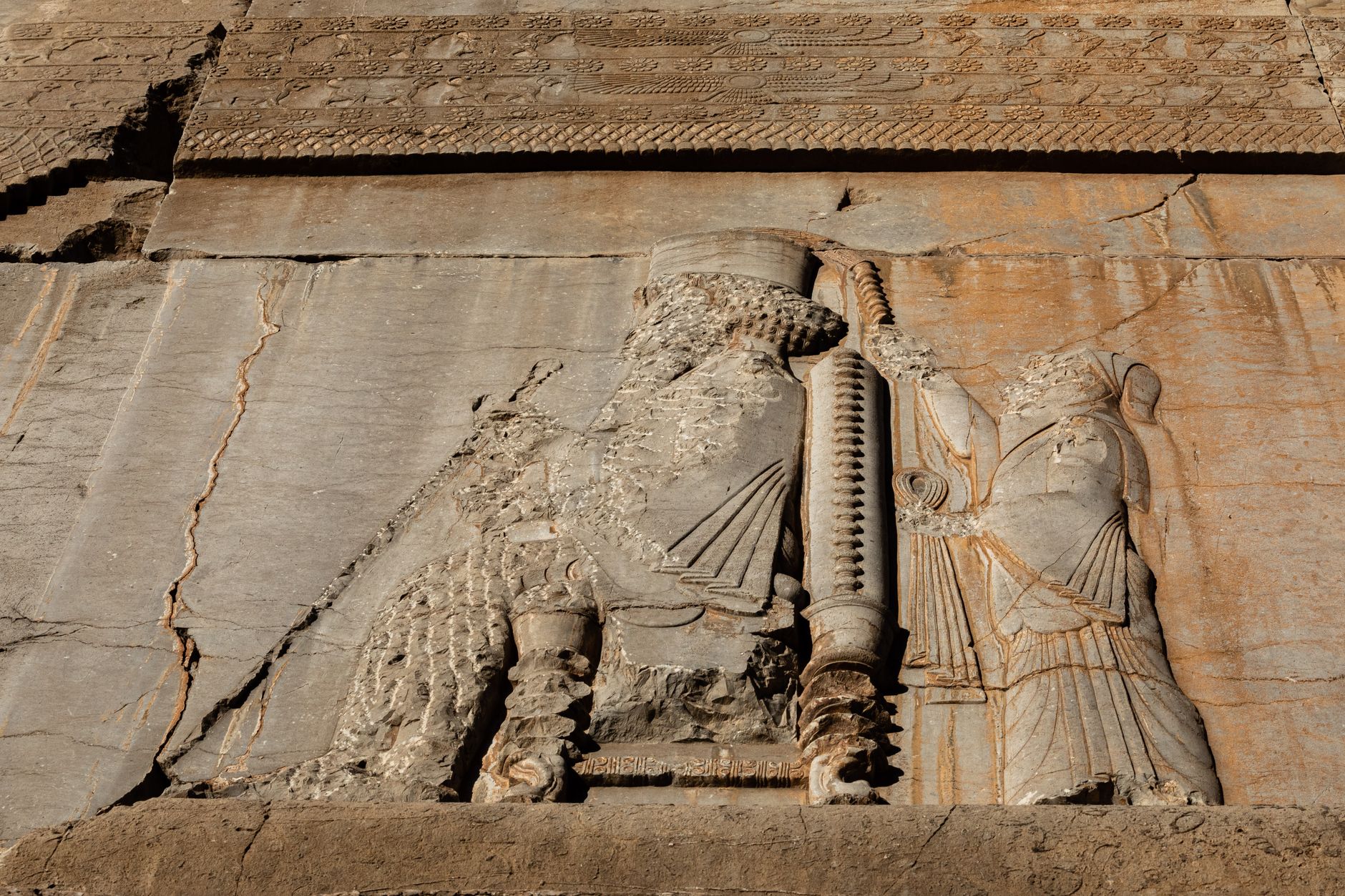
The most intellectually rich element of the Apadana is not the hall itself but the reliefs carved into its approach staircases. These are among the finest surviving examples of Achaemenid art, and they are explicitly propagandistic in the best sense — they are a carefully constructed argument about what the empire was.
The Apadana staircase reliefs at Persepolis depict delegations from approximately 23 subject nations bearing tribute gifts, providing one of the most detailed visual records of the Achaemenid Empire's geographic extent. Each delegation is visually distinct: different clothing, different hairstyles, different animals and objects carried as gifts. Lydians bring gold vessels. Indians lead a donkey. Ethiopians carry an okapi. Armenians bring a horse. The cumulative effect is a visual encyclopaedia of the empire's reach, from the eastern Mediterranean to the Indus Valley.
As an Amazon Associate, we earn from qualifying purchases.
Crucially, these processions are not chaotic. They are orderly, dignified, and — notably — not submissive in a humiliating way. The subject peoples are shown as distinct and honourable, but all moving in the same direction: toward the king. The ideological message is sophisticated. This is not conquest shown as brutal subjugation; it is tribute shown as natural, even willing, participation in a universal order centred on the Achaemenid throne. The reliefs do not depict battle or suffering. They depict harmony — a harmony that just happens to be arranged entirely around Persian supremacy.
Ceremony Over Administration: The Evidence
If Persepolis was primarily ceremonial, where did actual governance happen? The answer is largely Susa, a far older city in the lowland plains of what is now southwestern Iran. Archaeological evidence indicates Persepolis served as the site of Nowruz (Persian New Year) celebrations and royal reception ceremonies, while Susa functioned as the primary administrative capital of the Achaemenid Empire. Susa had year-round occupation, direct road connections via the Royal Road, and the dense archival activity you would expect from a working capital. Persepolis, by contrast, sits in a highland region that would have been brutal in winter and accessible mainly in spring — precisely when Nowruz falls.
This seasonal logic reinforces the ceremonial interpretation. The great halls, the tribute processions, the monumental gates — all of it makes most sense as the setting for the annual New Year reception, when delegations from across the empire would arrive, present gifts, and participate in rituals that renewed the cosmic and political order. Nowruz was not merely a calendar event; in Achaemenid ideology, it was the moment when the king's relationship with Ahura Mazda (the supreme deity of Zoroastrian belief) was reaffirmed and the empire's coherence re-enacted.
The Fortification Tablets: Real Life Behind the Ceremony
None of this means Persepolis was uninhabited outside of festivals. Scholarly analysis of the Persepolis Fortification Tablets, discovered in 1933, revealed detailed records of ration payments to workers and travelers, showing the site supported a significant resident population of laborers and officials during its construction phases. These clay tablets — thousands of them, written primarily in Elamite — record the movement of grain, wine, beer, and livestock to workers of many nationalities: Persians, Medes, Egyptians, Indians, Carians. The tablets name ration amounts, job categories, and even individual supervisors.
What the tablets reveal is an enormous, sophisticated logistics operation supporting construction and maintenance. Persepolis had a functioning economy — but it was the economy of a building site and a ceremonial centre, not the economy of a city with an organic civilian population, markets, or the kind of residential sprawl that characterises genuine urban centres. The workers were there to build and maintain the stage. The stage was there for something else entirely.
Architectural Grammar: Reading the Spaces
Beyond the Apadana, the terrace contains several other major structures that reinforce the ceremonial reading. The Throne Hall (sometimes called the Hall of a Hundred Columns) was likely used for the formal presentation of tribute after the Apadana ceremonies — a secondary audience space on an almost equally colossal scale. The Tachara, or private palace of Darius, shows more intimate proportions but is still lavishly decorated with relief carvings showing the king in procession, attended by servants and protected by divine symbols.
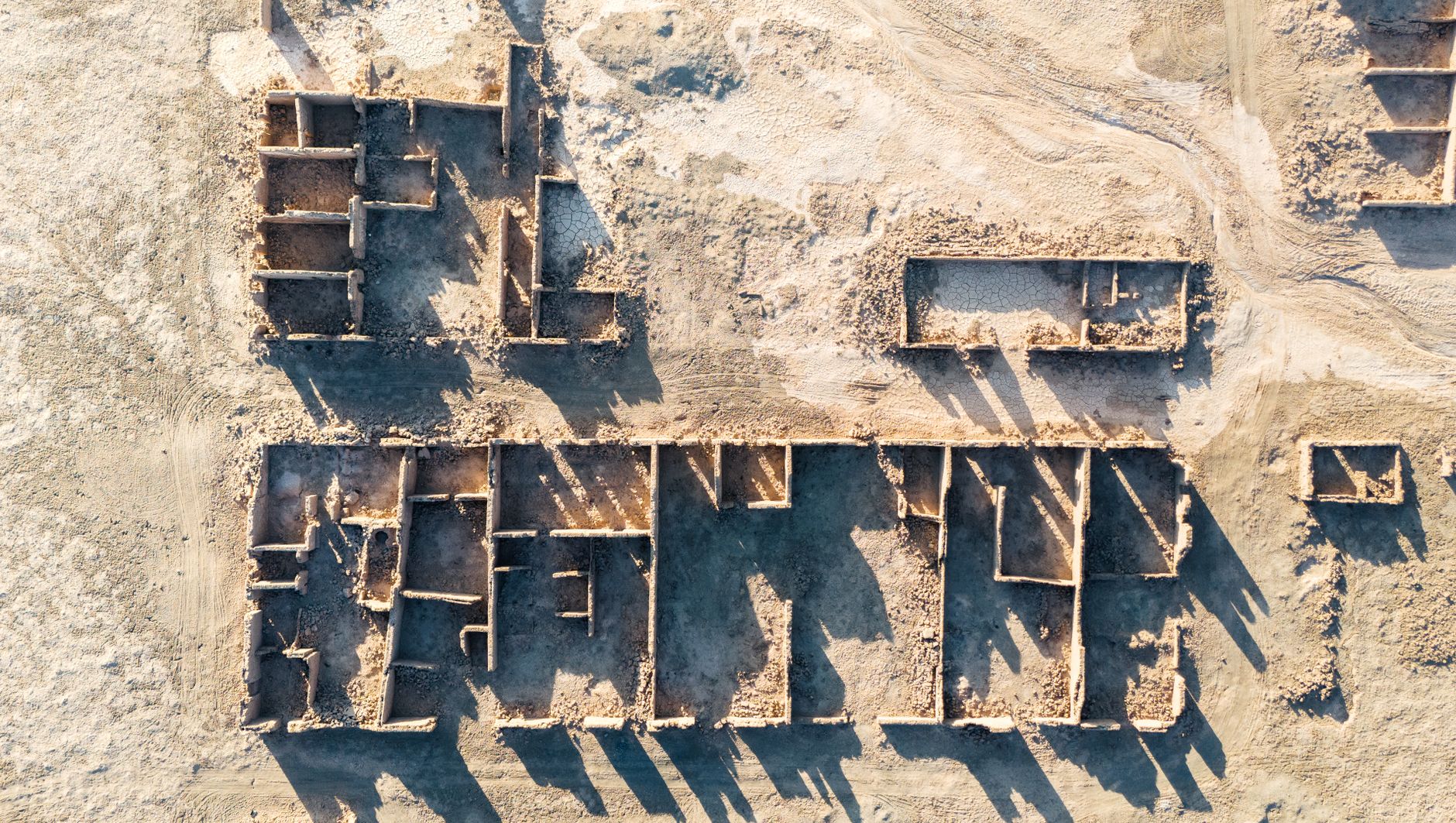
What is notably absent is what you would expect in a true capital: there are no temples, no marketplaces, no public religious sanctuaries of the kind found in contemporary Athens or Babylon. There is no identifiable residential district for a permanent civilian population. The sacred fire of Zoroastrian practice is attested at Persepolis, but the site is not organised around a temple complex the way a Mesopotamian city would be. It is organised around the king's body — his audience, his procession, his gaze.
Possible Astronomical Alignments
Some researchers have noted that certain architectural orientations at Persepolis align meaningfully with astronomical events, particularly the spring equinox — the astronomical moment that anchors Nowruz. The main axis of the Apadana and the orientation of the terrace more broadly have been analysed in this context. While the archaeoastronomical evidence here is less definitive than the relief iconography or the tablet records, it fits coherently with what we know about Nowruz's cosmological significance. A ceremony marking the renewal of the world would logically be aligned with the heavens renewing their own order.
The Deliberate Destruction — and What It Confirms
Perhaps the most revealing moment in Persepolis's history is its end. Alexander the Great burned Persepolis in 330 BCE, an event described by ancient sources including Diodorus Siculus as either deliberate retribution for the Persian burning of Athens or a drunken accident. Whether deliberate or accidental, Alexander clearly understood what Persepolis represented. This was not a city burned for military advantage — there was no great civilian population to terrorise, no vital supply depot to deny an enemy. It was a symbol destroyed for being a symbol.
By burning Persepolis, Alexander extinguished the ceremonial heart of the Achaemenid world. He was not capturing a capital in the way that capturing Babylon or Susa gave him control of real administrative machinery. He was performing a counter-ritual — answering the Achaemenid ideology of universal order with an act of deliberate unmaking. The fact that ancient sources felt this act required explanation (was it justice? was it passion?) suggests that even contemporaries understood the burning as something more than military tactics. You do not need to justify burning a warehouse. You do need to justify burning a symbol.
What Persepolis Actually Was
Taken together, the evidence points to a coherent and intentional design philosophy. Persepolis was an imperial theatre — a permanent, stone-built stage for the performance of Achaemenid ideology. Its audience halls were sized not for meetings but for spectacles. Its relief carvings were not decorative but argumentative, making a visual case for the empire's reach and legitimacy. Its seasonal logic tied it to a specific moment in the ritual calendar. Its multilingual inscriptions addressed the whole empire simultaneously. Even the labour that built it was documented with bureaucratic precision, because the Achaemenids were not romantic about administration — they simply separated the machinery of governance (Susa) from the theatre of power (Persepolis).
This distinction between functional capital and ceremonial capital is not unique to the Achaemenids — later empires would make similar separations — but few executed it with such architectural clarity. Persepolis does not look like a failed city or an unfinished one. It looks exactly like what it was: a place designed to make people feel the weight of an empire, to see themselves reflected in its relief carvings as participants (willing or not) in a world ordered from a single elevated terrace in the highlands of Fars.
The ruins that survive today — the stumps of columns, the astonishingly preserved reliefs, the vast terrace still dominating the plain below — retain something of that original quality. Even broken and open to the sky, Persepolis communicates scale, intention, and control. That it still does so, nearly two and a half millennia after Alexander's fire, suggests that Darius knew exactly what he was building.
Sources
Every factual claim in this article was independently verified against the following sources:
- The Apadana | Institute for the Study of Ancient Cultures — isac.uchicago.edu
- How to Visit Persepolis, Ancient Persia’s Ceremonial Capital | TheCollector — thecollector.com
- Alexander the Great & the Burning of Persepolis - World History Encyclopedia — worldhistory.org
- Apadana — Grokipedia — grokipedia.com
- Persepolis: The Ceremonial Heart of the Achaemenid Empire – Alan Dotchin Blog — blog.alandotchin.com
- Persepolis, Gate of All Nations - Livius — livius.org
- Persepolis Fortification Archive | Institute for the Study of Ancient Cultures — isac.uchicago.edu